Here is my latest story for Asia Times. I wrote about Japan's multibillion dollar contract on its next fighter jets. If you have time, please go over this. Cheers, Kosuke
Fighters duel for Japan air defense contractBy Kosuke Takahashi
TOKYO - Across the globe, defense industry players, military experts and potential adversaries are eagerly watching Japan's decision on its next mainstay fighter jet.
While Japan is still in the final selection process for a state-of-the-art combat plane for the Japan Air Self-Defense Force (JASDF), United States defense contractor Lockheed Martin's F-35 Joint Strike Fighter (JSF) is already seen as a clear front-runner, mainly due to its high-tech stealth capabilities.
Aiming to strengthen its efforts to win the multibillion-dollar contract, Lockheed Martin last week made a strong public appeal in Tokyo, saying it would license Japanese companies to perform engine assembly and manufacture major components if the F-35 were to be selected.
The F-35 has been developed jointly by nine nations: the US, Britain, the Netherlands, Italy, Canada, Norway, Denmark, Australia and Turkey. Potential buyers of this stealth fighter currently include Israel, Singapore, Japan and South Korea.
"We received US government approval to offer Japan, the first country outside the partnership, a very robust industrial opportunity," John Balderston, the director for Lockheed's Japan F-35 Campaign, told reporters on October 6 in a Tokyo hotel where the company was displaying a one-seater flight simulator of the warplane for media.
Asked about what the company could offer Japanese firms, Balderston said, "Final assembly and checkout of the airplane, manufacture of major components, engine assembly, integration and test, depot-level sustain, modification, repair and overhaul, and upgrade capabilities."
Japan has been worried that delays in the F-35's development would jeopardize its planned 2016 introduction. But company officials were upbeat. "We are confident that we will meet Japan's requirements, including delivery," Lockheed's Balderston said.
Tokyo could get the F-35 fighter jets at an average cost of US$65 million each, he added.
Japan's delayed F-X procurement
Japan's Ministry of Defense (MoD) aims to procure its first jet as early as fiscal year 2016, with plans to acquire a total of 40-50 aircraft at a cost of around US$4 billion.
It will choose the next mainstay fighter jet for the JASDF by the end of next month. This procurement will replace JASDF's aging fleet of 67 Mitsubishi/McDonnell Douglas F-4EJ fighters, which entered service in the early 1970s during the Vietnam War and are scheduled to be retired from 2013.
The MoD originally scheduled replacement of its F-4 fleet for fiscal year 2009. Tokyo had long made clear its preference for Lockheed's F-22 Raptor.
But the October 2009 decision by US President Barack Obama to halt F-22 production due to budgetary constraints officially ended any Japanese hopes of obtaining the aircraft, which while costly is seen as the world's most advanced air-superiority fighter.
Critics say the MoD's obsession with the F-22 caused years of delay in the next-generation fighter program, called the F-X in Japan.
The MoD will buy 12 fighters in the next five years, according to the new mid-term defense program for fiscal 2011-2015. The MoD on September 30 requested 55.1 billion yen (US$718 million) in fiscal 2012 budget appropriations to acquire four new fighter jets to replace the F-4.
Four selection criteria
Lockheed, Boeing and BAE Systems have met a September 26 deadline to submit bids for Japan's F-X fighter competition.
BAE Systems is leading the Typhoon bid for the Eurofighter consortium, with support from the British government and Japan's Sumitomo Corporation, while Boeing is offering its F/A-18E/F Super Hornet Block II in conjunction with the US Navy.
The MoD has identified four selection criteria: the performance of the aircraft and its weapons, maintenance costs, level of participation of domestic firms and after-sales support. Regarding performance criteria, the MoD is focusing on stealth, kinematic performance and information-processing capabilities.
On October 5, Japanese Defense Minister Yasuo Ichikawa stressed the need to protect the domestic fighter-jet-related industry.
All three bidders have pledged to allow fighters to be built under license in Japan. The question is how much production they will allow. Boeing says 70-80% could be done in Japan.
The JASDF has 202 Mitsubishi-Boeing F-15Js, 93 Mitsubishi F-2s and 67 Mitsubishi-McDonnell Douglas F-4EJ Kai Phantoms, according to the MoD's 2011 White Paper.
Aside from domestic production, other factors loom large. Firstly, the March 11 tsunami damaged 18 F-2s at the JASDF Matsushima Air Base in Miyagi prefecture, forcing the MoD to scrap 12 of them. The F-2 cost about 12 billion yen, or US$156 million, per unit.
While the F-4s have been in service since the early 1970s, the F-15Js have been a part of the fleet since the early 1980s, making both difficult and expensive for the JASDF to maintain.
In addition, on September 27, Mitsubishi Heavy Industries Ltd handed over its last F-2 fighter to the MoD at the Komaki Minami plant in Aichi prefecture, ending more than five decades of fighter-jet production since 1956. The Japanese media reported about two dozen parts suppliers and manufacturers had exited from the fighter-jet market.
As if to illustrate Japan's strains in air defense, a F-15J Eagle based at Naha Air Base in Okinawa prefecture crashed in the East China Sea on July 5 during combat training. More recently, an F-15 fighter lost an empty auxiliary fuel tank and part of a mock missile on October 7 during a training flight over Ishikawa prefecture.
Russia and China appear to have exploited the weaknesses in Japan's air defense. The number of scrambles the JASDF had to launch increased dramatically in recent years to intercept intruders, as Russian and Chinese military aircraft toyed with Japanese airspace. Japan scrambled fighters 386 times in fiscal year 2010, the highest number since 1991.
Russia is jointly developing a fifth-generation fighter T-50 (PAK FA) with India, while China is developing its own new fifth-generation multi-purpose fighter, the J-20. For Japan, the threat from the air is increasing.
Japan has never procured European fighters. More than a few experts have pointed out the Eurofighter may lack full interoperability with US military equipment, which Japan relies on. However, British ambassador David Warren has stressed that this is not the case.
Maintenance and repair is another worry for the Eurofighter since Japan is accustomed to US equipment.
As for Boeing's F/A-18E/F Super Hornet, it is little more than the F-2, or Japan's most advanced 4th-generation multirole fighter based on the F-16. The stealth capabilities of the Eurofighter and Super Hornet are weaker than the F-35.
"Considering all the various factors together such as the state of the domestic fighter-jet-related defense industry, the interoperability with US equipment and China's air capabilities, which Japan needs to be most aware of, the F-35 is the most likely winner," said Hideshi Takesada, a professor at Yonsei University of South Korea.
Kosuke Takahashi is a Tokyo-based Japanese journalist. His twitter is @TakahashiKosuke
(Copyright 2011 Asia Times Online (Holdings) Ltd. All rights reserved. Please contact us about sales, syndication and republishing.)
Tuesday, October 11, 2011

Friday, August 26, 2011
Japan's largest mega-solar debuted in the heart of the Tokyo metropolitan area
I visited Japan's largest mega-solar power plant in Kawasaki City, adjoining Tokyo.

I also visited the first urban-type biomass power plant in Japan.


Friday, July 22, 2011
(My latest stories for Jane's Defence Weekly)


Briefing: Big birds
Japanese F-15 crashes in training
Japan, US delay Futenma move, choose new site for 7th Fleet landing training
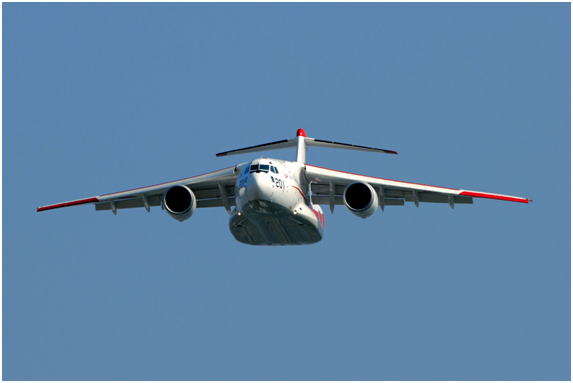
Here are more photos of my favorite Kawasaki XC-2 aircraft.
Photo Credit: Technical Research and Development Institute, Ministry of Defense, Japan




(My latest story for Asia Times) Japan-South Korea ties hit turbulence
Japan-South Korea ties hit turbulence
Japan has banned diplomats from using South Korea's Korean Air after the airline directed the maiden flight of an Airbus A380 service over disputed islands called Takeshima by Japanese and Dokdo by Koreans. The flare-up of the long-simmering East Asian island feud impacts on the nations' united front against North Korea's military ambitions and benefits China's muscle-flexing in the Pacific. - Kosuke Takahashi (Jul 15, '11)

Japan-South Korea ties hit turbulence
By Kosuke Takahashi
TOKYO - The flaring up of a long-simmering territorial dispute between Japan and South Korea over a group of small rocky islets threatens to roll back recent rapprochement between the neighbors seen in economic deals and cross-cultural exchanges.
The Japanese Foreign Ministry on July 11 instructed ministry officials to boycott Korean Air flights for one month in protest at the airline's demonstration flight last month above disputed islets called Takeshima by Japanese and Dokdo by Koreans that are located in the Sea of Japan (known in Korea as the East Sea).
The controversy could damage a culture boom in Tokyo called the Han-Ryu (Korean wave). Young Korean idol groups such as Girls' Generation and KARA are very popular in Japan. More importantly it could cause a significant geopolitical split.
The united front Tokyo and Seoul present against North Korea's nuclear and missile ambitions could be impacted, with China muscle-flexing in both the East China Sea and the South China Sea also benefiting from the East Asian feud.
This was Japan's first-ever step against a private airline in connection with the territorial dispute. The islets are claimed by both Japan and South Korea, but have been occupied by South Korea since 1954.
Korean Air was testing its new Airbus A380 - the world's largest passenger plane - and entered airspace above the contested islets on June 16, or a day before it went into service between Seoul Incheon International Airport and Tokyo Narita International Airport. The jet carried executives of the airline as well as South Korean and foreign reporters and photographers such as Reuters.
On Thursday, Japan's State Foreign Secretary Chiaki Takahashi said at a press conference that the ministry would not invite Korean Air officials to events it will host. He described the June 16 test flight as "a violation of Japan's airspace".
Ukeru Magosaki, the former chief of the Japanese Foreign Ministry's international intelligence bureau, criticized the ministry's sanctions against Korean Air.
"The boycott makes it more difficult to solve the territorial dispute," Magosaki, the former diplomat told Asia Times Online on Friday. "For the ministry, reducing tensions is more important than any other. The ministry is, in an opposite manner, escalating the problem."
The Asahi Shimbun, which first reported this issue on Wednesday, said Japan's conservative opposition had pressured the ministry to take further action, resulting in the move to boycott the airline.
This ministry has confirmed the boycott does not violate the Agreement on Government Procurement of the World Trade Organization, commonly known as the GPA, focusing on the subject of government procurement.
The gesture is purely symbolic, as Japanese diplomats use domestic airlines such as All Nippon Airways and Japan Airlines.
South Korea's reaction
As expected, the harshest reaction has come from the South Korean government.
"The Japanese measure, regarded as a sort of sanction against a private company, can hardly be understood," Foreign Ministry spokesman Cho Byung Jae on Thursday told reporters, demanding an immediate withdrawal of the Japanese foreign ministry's measure.
Cho said the South Korean government will take "stern" measures regarding the issue, but did not specify what measures it would take. "We will watch what measures Japan will take," the spokesman said.
Seoul also sent a message of protest against the measure on Tuesday to Kanehara Nobukatsu, minister for general affairs at the Japanese Embassy in Seoul and urged its cancelation.
The prelude of the recent flare-up first occurred in March when Seoul strongly protested against Tokyo's approval of history textbooks containing territorial claims to South Korean-controlled islets.
Then, in early April, South Korea's Yonhap News Agency reported construction work on a 2,700-square-meter maritime science facility on the disputed islets was expected to start later that month and set to be complete by December next year. Tokyo on April 5 lodged a protest with South Korea over Seoul's plans to build the facility.
More than 10 South Korean lawmakers, including several ministers, have visited the disputed territories since April.
Furthermore, three South Korean lawmakers on May 24 visited Kunashiri island, one of four islands off the coast of Hokkaido controlled by Russia but claimed by Japan - to the fury of Tokyo. It was the first time members of the South Korean National Assembly had set foot on the islands, which are known as the Northern Territories, called the Southern Kurils by Russians.
Given the saga that erupted from Japan's arrest of a Chinese fishing captain last year, Tokyo's reaction to the Korean Air flight may reflect internal wrangling over foreign policy. South Korean politicians also cannot make major concessions to Japan ahead of upcoming key elections in 2012 for parliament and the presidency.
Kosuke Takahashi is a Tokyo-based Japanese journalist. His twitter is @TakahashiKosuke
(Copyright 2011 Asia Times Online (Holdings) Ltd. All rights reserved. Please contact us about sales, syndication and republishing.)
Japan has banned diplomats from using South Korea's Korean Air after the airline directed the maiden flight of an Airbus A380 service over disputed islands called Takeshima by Japanese and Dokdo by Koreans. The flare-up of the long-simmering East Asian island feud impacts on the nations' united front against North Korea's military ambitions and benefits China's muscle-flexing in the Pacific. - Kosuke Takahashi (Jul 15, '11)
Japan-South Korea ties hit turbulence
By Kosuke Takahashi
TOKYO - The flaring up of a long-simmering territorial dispute between Japan and South Korea over a group of small rocky islets threatens to roll back recent rapprochement between the neighbors seen in economic deals and cross-cultural exchanges.
The Japanese Foreign Ministry on July 11 instructed ministry officials to boycott Korean Air flights for one month in protest at the airline's demonstration flight last month above disputed islets called Takeshima by Japanese and Dokdo by Koreans that are located in the Sea of Japan (known in Korea as the East Sea).
The controversy could damage a culture boom in Tokyo called the Han-Ryu (Korean wave). Young Korean idol groups such as Girls' Generation and KARA are very popular in Japan. More importantly it could cause a significant geopolitical split.
The united front Tokyo and Seoul present against North Korea's nuclear and missile ambitions could be impacted, with China muscle-flexing in both the East China Sea and the South China Sea also benefiting from the East Asian feud.
This was Japan's first-ever step against a private airline in connection with the territorial dispute. The islets are claimed by both Japan and South Korea, but have been occupied by South Korea since 1954.
Korean Air was testing its new Airbus A380 - the world's largest passenger plane - and entered airspace above the contested islets on June 16, or a day before it went into service between Seoul Incheon International Airport and Tokyo Narita International Airport. The jet carried executives of the airline as well as South Korean and foreign reporters and photographers such as Reuters.
On Thursday, Japan's State Foreign Secretary Chiaki Takahashi said at a press conference that the ministry would not invite Korean Air officials to events it will host. He described the June 16 test flight as "a violation of Japan's airspace".
Ukeru Magosaki, the former chief of the Japanese Foreign Ministry's international intelligence bureau, criticized the ministry's sanctions against Korean Air.
"The boycott makes it more difficult to solve the territorial dispute," Magosaki, the former diplomat told Asia Times Online on Friday. "For the ministry, reducing tensions is more important than any other. The ministry is, in an opposite manner, escalating the problem."
The Asahi Shimbun, which first reported this issue on Wednesday, said Japan's conservative opposition had pressured the ministry to take further action, resulting in the move to boycott the airline.
This ministry has confirmed the boycott does not violate the Agreement on Government Procurement of the World Trade Organization, commonly known as the GPA, focusing on the subject of government procurement.
The gesture is purely symbolic, as Japanese diplomats use domestic airlines such as All Nippon Airways and Japan Airlines.
South Korea's reaction
As expected, the harshest reaction has come from the South Korean government.
"The Japanese measure, regarded as a sort of sanction against a private company, can hardly be understood," Foreign Ministry spokesman Cho Byung Jae on Thursday told reporters, demanding an immediate withdrawal of the Japanese foreign ministry's measure.
Cho said the South Korean government will take "stern" measures regarding the issue, but did not specify what measures it would take. "We will watch what measures Japan will take," the spokesman said.
Seoul also sent a message of protest against the measure on Tuesday to Kanehara Nobukatsu, minister for general affairs at the Japanese Embassy in Seoul and urged its cancelation.
The prelude of the recent flare-up first occurred in March when Seoul strongly protested against Tokyo's approval of history textbooks containing territorial claims to South Korean-controlled islets.
Then, in early April, South Korea's Yonhap News Agency reported construction work on a 2,700-square-meter maritime science facility on the disputed islets was expected to start later that month and set to be complete by December next year. Tokyo on April 5 lodged a protest with South Korea over Seoul's plans to build the facility.
More than 10 South Korean lawmakers, including several ministers, have visited the disputed territories since April.
Furthermore, three South Korean lawmakers on May 24 visited Kunashiri island, one of four islands off the coast of Hokkaido controlled by Russia but claimed by Japan - to the fury of Tokyo. It was the first time members of the South Korean National Assembly had set foot on the islands, which are known as the Northern Territories, called the Southern Kurils by Russians.
Given the saga that erupted from Japan's arrest of a Chinese fishing captain last year, Tokyo's reaction to the Korean Air flight may reflect internal wrangling over foreign policy. South Korean politicians also cannot make major concessions to Japan ahead of upcoming key elections in 2012 for parliament and the presidency.
Kosuke Takahashi is a Tokyo-based Japanese journalist. His twitter is @TakahashiKosuke
(Copyright 2011 Asia Times Online (Holdings) Ltd. All rights reserved. Please contact us about sales, syndication and republishing.)
Friday, July 1, 2011
(Jane's Defence Weekly) North Korea could be preparing the site for a third nuclear test
ASIA PACIFIC
Date Posted: 23-Jun-2011
Jane's Defence Weekly
________________________________________
Satellite images show continued activity at North Korea's nuclear test site
Allison Puccioni Jane's Image Analyst
California
James Hardy JDW Asia-Pacific Editor
London
Key Points
• Images taken of North Korea's nuclear test site on 10 June 2011 show significant excavation since October 2010
• The images suggest that North Korea could be preparing the site for a third nuclear test following similar tests in 2006 and 2009
Satellite images provided by GeoEye show continued activity at the site of North Korea's 2006 and 2009 underground nuclear tests.
A comparison of 10 June 2011 images with those taken by DigitalGlobe on 16 October 2010 shows significantly more excavation at two sites: one just south of the test site operations base and one about 900 m east of the main base. The latter site also has three new buildings.
The 10 June GeoEye image shows 25-30 per cent more excavation extending far closer to the adjacent road. This may suggest that a tunnel is being excavated in preparation for a nuclear test.
North Korea tested nuclear devices in 2006 and 2009 in tunnels at the site, which is on the slopes of Mount Mantap-san about 42 km northwest of Kilchu, North Hamgyong province. Ahead of the 2006 test, it was reported that the North Koreans had excavated a 700 m-long horizontal tunnel under Mantap-san.
ANALYSIS
Jane's analysis of the site comes after diplomatic sources reported rumours of nuclear weapon-related activity in the past three months. Jane's reported on 10 June that satellite imagery showed no activity at two known missile test sites in North Korea; the imagery of the Kilchu site illustrates that, if there is activity, it is taking place at the nuclear test site.
Scott Snyder, director of the Center for US-Korea Policy in Washington, DC, said it was unclear what Pyongyang would gain from holding a test now.
"A new nuclear test would result in a drive to ratchet up UN sanctions and would test China's strategic commitment to North Korea," Snyder said.
"Given the poor prospects for inter-Korean relations for the foreseeable future, it is possible that the North Koreans might see heightened tensions as a vehicle for getting around South Korea and drawing new attention from the US, but this sort of strategy has proven increasingly ineffective in drawing the sort of attention that North Korea wants."
A diplomatic source told Jane's that recent weeks had seen no major changes in North Korean rhetoric, most of which referred to retaliation for propaganda balloon releases into the North by South Korean political groups and demands for the return of nine North Korean refugees who sailed into South Korean waters in mid-June.
Date Posted: 23-Jun-2011
Jane's Defence Weekly
________________________________________
Satellite images show continued activity at North Korea's nuclear test site
Allison Puccioni Jane's Image Analyst
California
James Hardy JDW Asia-Pacific Editor
London
Key Points
• Images taken of North Korea's nuclear test site on 10 June 2011 show significant excavation since October 2010
• The images suggest that North Korea could be preparing the site for a third nuclear test following similar tests in 2006 and 2009
Satellite images provided by GeoEye show continued activity at the site of North Korea's 2006 and 2009 underground nuclear tests.
A comparison of 10 June 2011 images with those taken by DigitalGlobe on 16 October 2010 shows significantly more excavation at two sites: one just south of the test site operations base and one about 900 m east of the main base. The latter site also has three new buildings.


The 10 June GeoEye image shows 25-30 per cent more excavation extending far closer to the adjacent road. This may suggest that a tunnel is being excavated in preparation for a nuclear test.
North Korea tested nuclear devices in 2006 and 2009 in tunnels at the site, which is on the slopes of Mount Mantap-san about 42 km northwest of Kilchu, North Hamgyong province. Ahead of the 2006 test, it was reported that the North Koreans had excavated a 700 m-long horizontal tunnel under Mantap-san.
ANALYSIS
Jane's analysis of the site comes after diplomatic sources reported rumours of nuclear weapon-related activity in the past three months. Jane's reported on 10 June that satellite imagery showed no activity at two known missile test sites in North Korea; the imagery of the Kilchu site illustrates that, if there is activity, it is taking place at the nuclear test site.
Scott Snyder, director of the Center for US-Korea Policy in Washington, DC, said it was unclear what Pyongyang would gain from holding a test now.
"A new nuclear test would result in a drive to ratchet up UN sanctions and would test China's strategic commitment to North Korea," Snyder said.
"Given the poor prospects for inter-Korean relations for the foreseeable future, it is possible that the North Koreans might see heightened tensions as a vehicle for getting around South Korea and drawing new attention from the US, but this sort of strategy has proven increasingly ineffective in drawing the sort of attention that North Korea wants."
A diplomatic source told Jane's that recent weeks had seen no major changes in North Korean rhetoric, most of which referred to retaliation for propaganda balloon releases into the North by South Korean political groups and demands for the return of nine North Korean refugees who sailed into South Korean waters in mid-June.
Friday, June 24, 2011
(My latest story) Asia Times Online : Mage Island another tinderbox for Japan
A Japanese-United States plan to use a small island in Kagoshima prefecture for carrier-borne landing practice suggests the allies have learnt little from the US presence on Okinawa. While entrenched local opposition to the militarization of Mage Island is mobilizing in earnest, there are good military reasons - such as the island's vulnerability - to find a better realignment strategy for US forces. - Kosuke Takahashi (Jun 24, '11)

Mage Island another tinderbox for Japan
By Kosuke Takahashi
TOKYO - Across the globe, bureaucrats tend to make up fascinating armchair plans. But without regard to local input, that's just a castle in the air - however ingeniously conceived. Without regard for the environment or consideration of local people, no mere desk plan will do.
A very good example is the long-standing controversial relocation issue of the United States Marine Corps Air Station (MCAS) at Futenma in Okinawa prefecture in Japan's south.
But now, foreign and defense policymakers of the US and Japan are about to repeat the same failure, as they have caused another friction with local governments over a small island of western Japan called Mage Island.

The joint statement, issued by four foreign and defense ministers of the US and Japan after the so-called two-plus-two security meeting in Washington, for the first time specifically mentioned the name of Mage Island for the "use by US forces as a permanent field carrier landing practice site".
Yet another Futenma?
"Mage Island could be yet another Futenma," Japanese military analyst Toshiyuki Shikata told Asia Times Online. "The government, led by the ruling Democratic Party of Japan, has made no serious efforts to convince local people of the plan. They ignored democratic process."
Mage Island covers about 800 hectares and is located around 12 kilometers west of Tanegashima between Kyushu and Okinawa. It was picked as the permanent site for the so-called Field Carrier Landing Practice (FCLP) of the US Navy's Carrier Air Wing 5 (CVW-5) based at Naval Air Facility Atsugi of Kanagawa prefecture, southwest of Tokyo, or the largest US Naval Air Facility in the Pacific. Most of the island is privately owned by a land developer headquartered in Tokyo. Permission from this company is required to land on the island as a general rule.
Under the 2006 bilateral road map agreement on the realignment of US forces in Japan, CVW-5 squadrons, together with their 59 US carrier-borne jet fighters such as the Boeing F/A-18E/F Super Hornet, are set to be transferred from the Atsugi naval base to the MCAS Iwakuni in Yamaguchi prefecture.

Mage Island is only about 400 kilometers from MCAS Iwakuni, while Iwo Island is around 1,200 kilometers away from the Atsugi naval base, thus making flight drills on Mage Island more convenient for the US Navy.
Local opposition
Just as Okinawans have opposed the relocation of the Futenma base to a new helicopter base scheduled for construction off the shores of the beautiful Henoko bay, local officials and residents in Nishinoomote City are beginning to protest the plan to transfer the drills to Mage Island in earnest.
Chikara Nagano, mayor of Nishinoomote City, has said, "We harbor strong resentment against the government's high-handed tactics ignoring local communities' will, and we will never permit it."
Kagoshima governor Yuichiro Ito also voiced his opposition, by saying "it's needed to protest against the plan, together with local people".
Eleven groups such as civic, tourist and medical associations in Nishinoomote City on June 22 jointly issued a letter of protest, under which they pledged to remain adamantly against the plan.
Under the plan, the Japanese Ministry of Defense plans to build a Self-Defense Forces (SDF) facility on Mage Island and conduct the landing practice as part of its efforts to boost security around the Nansei Islands in Okinawa prefecture, and in the East China Sea near China and Taiwan, a move that is apparently aimed at countering China's growing naval power.
In the meantime, the US also plans to conduct the field carrier landing practice there.

Talk of Mage Island as a candidate site for the envisaged flight drill facility arose in 2007 under the administration of the Liberal Democratic Party and its coalition partner the New Komeito party.
But it disappeared soon due to strong local opposition from the Nishinoomote and nearby municipalities. Then, in December 2009 under the former Yukio Hatoyama administration, the island was even considered as a candidate for the Futenma transfer. But again this idea was scrapped because of strong local protest.
Japanese military analyst Shikata said it is militarily nonsense to build the drill site on an uninhabited island such as Mage Island.
"Small islands are vulnerable to external attacks," Shikata said. "Terrorists can easily attack them. Moreover, the US needs the SDF troops for their own safety, just as the US forces in Okinawa are protected by the SDF troops there. You cannot easily build the drill site for the US in such an uninhabited island without SDF personnel."
Kosuke Takahashi is a Tokyo-based Japanese journalist. His twitter is @TakahashiKosuke
(Copyright 2011 Asia Times Online (Holdings) Ltd. All rights reserved. Please contact us about sales, syndication and republishing.)
Sunday, June 19, 2011
(AFP) U.S. Senate Moves to Freeze Japan Base Move - Defense News
U.S. Senate Moves to Freeze Japan Base Move - Defense News
AGENCE FRANCE-PRESSE
Published: 18 Jun 2011 11:21
WASHINGTON - U.S. senators said June 17 that they have taken a major step to halt a controversial military base plan on Japan's Okinawa Island and called on the Pentagon to make a fresh assessment.
Brushing aside insistence by the two governments that plans should go ahead, the Senate Armed Services Committee agreed to bar any funds to move troops from Japan to Guam and ordered a new study on Okinawa's flashpoint Futenma base.
The language was part of an annual defense funding act approved June 16.
It needs approval from the full Senate and House of Representatives, but senators involved said that their actions on Asian bases enjoyed broad support.
Sen. Carl Levin, a member of President Barack Obama's Democratic Party who heads the committee, said that the base plan in Japan increasingly appeared unfeasible and that the United States needed to control costs.
"This is a major step to put all these changes on hold and to require some analysis of cost and to take an honest look at what the current plans are and what the alternatives are," Levin told reporters on a conference call.
The Senate intervened even though the Obama administration had put its foot down with Japan, insisting that the base plan could not be changed. One Japanese prime minister, Yukio Hatoyama, resigned last year after failing to fulfill campaign promises to come up with a new plan on the Futenma base.
"I think people have kind of hidden their heads in the sand because everyone just says, 'We've got a plan, we're going to keep going.' But the problem is the current plan isn't affordable, it's not workable," Levin said.
Okinawa is home to around half of the 47,000 U.S. troops stationed in Japan under a post-World War II security treaty. Futenma, a Marine Corps air station, is a particular source of grievance as it lies in what has become a crowded urban area.
Under a 2006 plan first approved by President George W. Bush's administration and a previous conservative government in Japan, the United States would close Futenma and move its aircraft to an isolated beach elsewhere in Okinawa. Some 8,000 Marines would leave Okinawa for Guam, a U.S. territory, in 2014.
The Senate bill prohibits funds for the Marine move until commanders provide an updated plan for Guam - where public support has been dwindling - and the Defense Department certifies "tangible progress" on the Futenma riddle.
Amid a push by lawmakers to tame a soaring debt, the Senate committee also cut $150 million during the year starting in October for projects linked to the shift to Guam.
The bill requires the Defense Department to study an alternative, drafted by Democratic Sen. Jim Webb of Virginia, to close and return Futenma's real estate and move its air assets to Okinawa's existing Kadena Air Base.
Under Webb's proposal, some air assets would be moved from Kadena to other parts of Japan and Guam - a solution he argued would reduce both congestion and costs.
"These recommendations are workable, cost-effective, will reduce the burden on the Okinawan people and will strengthen the American contribution to the security of the region," Webb, a former combat Marine who heads a subcommittee on East Asia, said in a statement.
In South Korea, the Senate bill would end funding obligations for troops to bring their families. Starting in 2007, military commanders have allowed many of the 28,500 troops stationed in South Korea to be accompanied.
A recent study by the non-partisan Government Accountability Office said that the Defense Department did not sufficiently study the costs of the change, which could total $22 billion through 2050.
The Senate bill does not freeze the overall base shift in South Korea, as initially proposed by Webb, Levin and Republican Sen. John McCain who voiced concern about mounting costs.
The U.S. military plans to start shifting next year to a base in the city of Pyeongtaek, eventually closing the huge Yongsan base in Seoul which was set up for the 1950-53 Korean War but now lies in the heart of a bustling metropolis.
Subscribe to:
Posts (Atom)